Strength with context
A measured guide to resistance, capacity and the role of recovery in a sustainable routine for men beyond 30.
What strength practice can include
| Pattern | Everyday example | Useful focus |
|---|---|---|
| Push | Placing an object on a shelf | Stable posture and controlled effort |
| Pull | Opening a door or carrying a bag | Steady shoulder and trunk position |
| Carry | Moving groceries through a hallway | Breathing, balance and an appropriate load |
Progress is information
A session should leave you able to understand what happened. Record the movement, load, repetitions and how recovery felt. This creates a conversation with your future self rather than a demand to constantly increase.
- Use a load you can control through the intended range.
- Leave room for technique to remain clear.
- Rest long enough to make the next set meaningful.
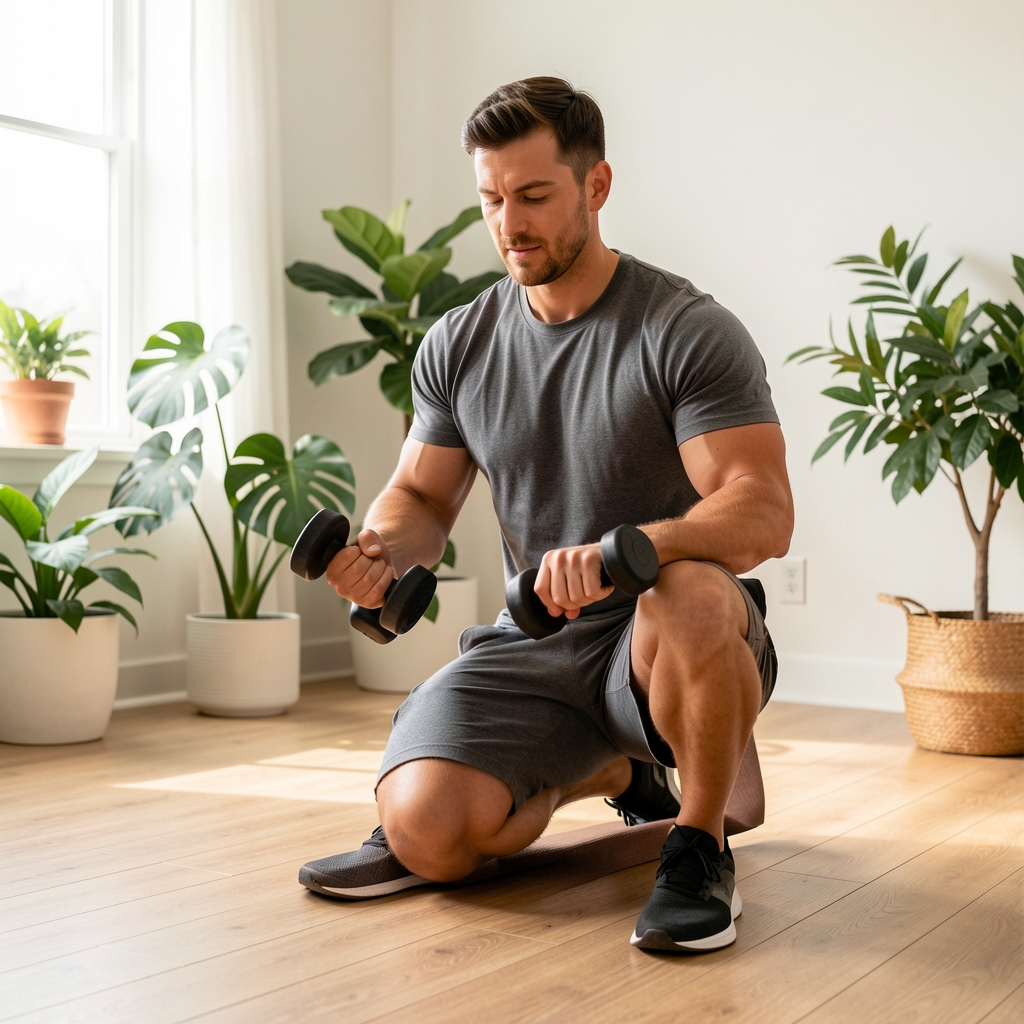
A four-stage session
- Prepare the space and review the plan.
- Warm up with easy, familiar movement.
- Complete a small number of controlled exercises.
- Write down one observation before leaving.
Recovery belongs in the plan
Sleep, food, work stress and previous activity all affect how a session feels. A lower-volume day can be a thoughtful adjustment rather than a failure.
Safety and individual guidance
New pain, dizziness, unusual shortness of breath, an injury history or uncertainty about technique calls for appropriate professional guidance. Helian provides general education, not personal programming.
Strength questions
Do I need a gym?
No. Bodyweight movements, household objects and a stable chair may provide options, depending on the person and the activity.
How often should I train?
Choose a schedule that leaves room for recovery and fits other responsibilities. A qualified trainer can help tailor details.
Should every session feel difficult?
No. Technique, range, control and consistency can be useful measures alongside effort.