Joint variety
Change positions during the day so one posture does not become the only posture. A short standing break can be as meaningful as a formal session.
Helian explores comfortable movement for men beyond 30, with attention to work, recovery and ordinary routines.
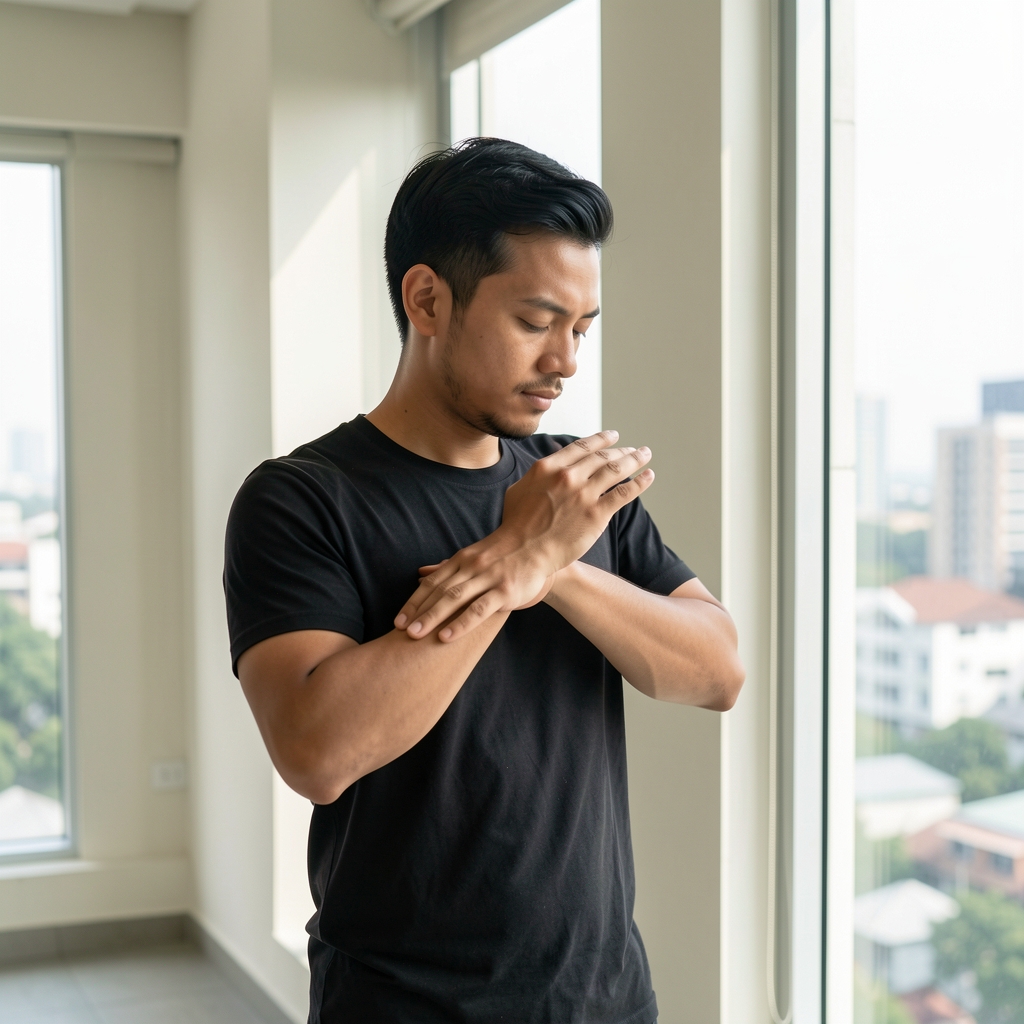
Mobility is not a performance test. It is the practical ability to move through familiar tasks with confidence and awareness. A useful routine begins by noticing how sitting, commuting, carrying and resting shape the day.
Move slowly enough to observe the difference between effort and discomfort. Keep the range comfortable, breathe naturally, and make space for professional advice when pain, weakness or a sudden change needs individual assessment.
Change positions during the day so one posture does not become the only posture. A short standing break can be as meaningful as a formal session.
Easy breathing helps keep a movement exploratory rather than rushed. It also gives you a simple cue for reducing unnecessary tension.
Ten considered minutes repeated across a week may be easier to understand than an occasional demanding routine.
| Situation | Useful question | Gentle option |
|---|---|---|
| Desk work | Have I stayed in one position too long? | Stand, look across the room and walk for a few minutes. |
| Travel | What feels compressed after the journey? | Use easy shoulder, ankle and hip movements. |
| Training | What is my body communicating today? | Adjust range, pace or volume instead of ignoring signals. |
Morning stiffness, a long meeting or a busy household can change what is appropriate. A flexible plan is easier to return to than a rigid promise.
Persistent pain, loss of strength, swelling, numbness or a movement change after an injury deserves individual attention from a qualified professional. General reading cannot replace an assessment of your history.
No. A clear floor, a stable chair and comfortable clothing are often enough for gentle exploration.
Choose a rhythm compatible with your schedule. Short pauses distributed through the day can complement planned activity.
Stop and seek appropriate guidance rather than forcing the range or interpreting discomfort as progress.